VANCOUVER CIVIC ELECTION
/VANCOUVER CITY ELECTION
Saturday, October 17
On Saturday, October 17, West End - Coal Harbour citizens will make a trip to the polls to elect a mayor, ten councillors, seven Park Board commissioners, and nine Vancouver School Board Trustees.
In early September The West End Journal sent the following inquiry to all the political parties’ running candidates:
The West End Journal, serving Vancouver's West End-Coal Harbour community since 2017, invites each party running in the upcoming civic election to share with our readers your thoughts and ideas on four issues of concern to residents of our corner of the city. We will publish your responses in the October issue, which will be launched online on Tuesday, September 29.
We would like to know what your views and proposed actions are with regards to:
The proposed 24-story hotel development planned for 2030 Barclay.
Plans for a much smaller pool at a new Aquatic Centre.
The effective destruction of Nelson Park to build a new BC Hydro substation.
The issue of cyclists and scooters using sidewalks and other non-vehicle and bike lane routes.
Please send your responses to editor@thewestendjournal.ca no later than Friday, September 25.
Thank you for your consideration,
Kevin Dale McKeown / Editor & Publisher
On September 25 we extended the deadline to Monday, September 28.
The Candidates
The following parties and candidates have responded by press time, and their answers can be found below.
ABC Vancouver - mayoral candidate and current incumbent Ken Sim
COPE Vancouver
Note: In early September COPE Vancouver and OneCity withdrew their mayoral candidates, while still running a slate of candidates for Council, Park Board, and School Board. Neither party officially endorsed Green candidate Pete Fry, but the moves were part of a strategy to limit the number of progressive options in a crowded field of candidates looking to unseat Mayor Ken Sim.Green Party of Vancouver - mayoral candidate Pete Fry
TEAM for a Livable Vancouver - mayoral candidate Colleen Hardwick
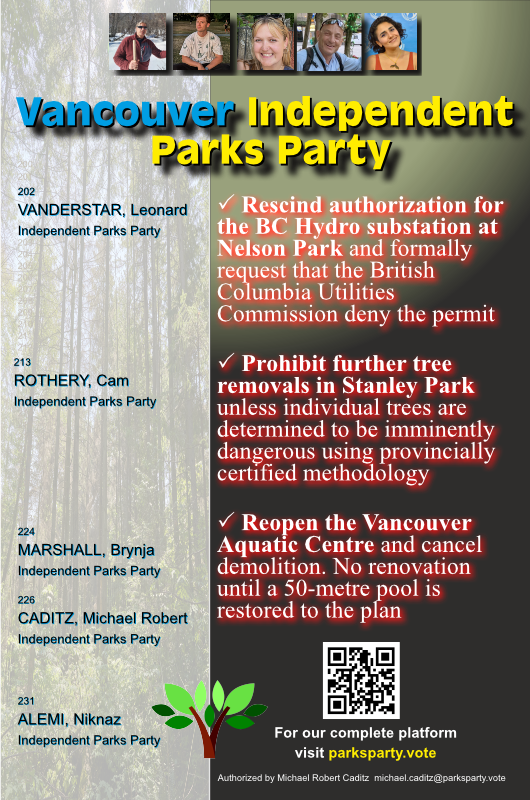
Vancouver Independent Parks Party - Parks Board candidate Michael Caditz
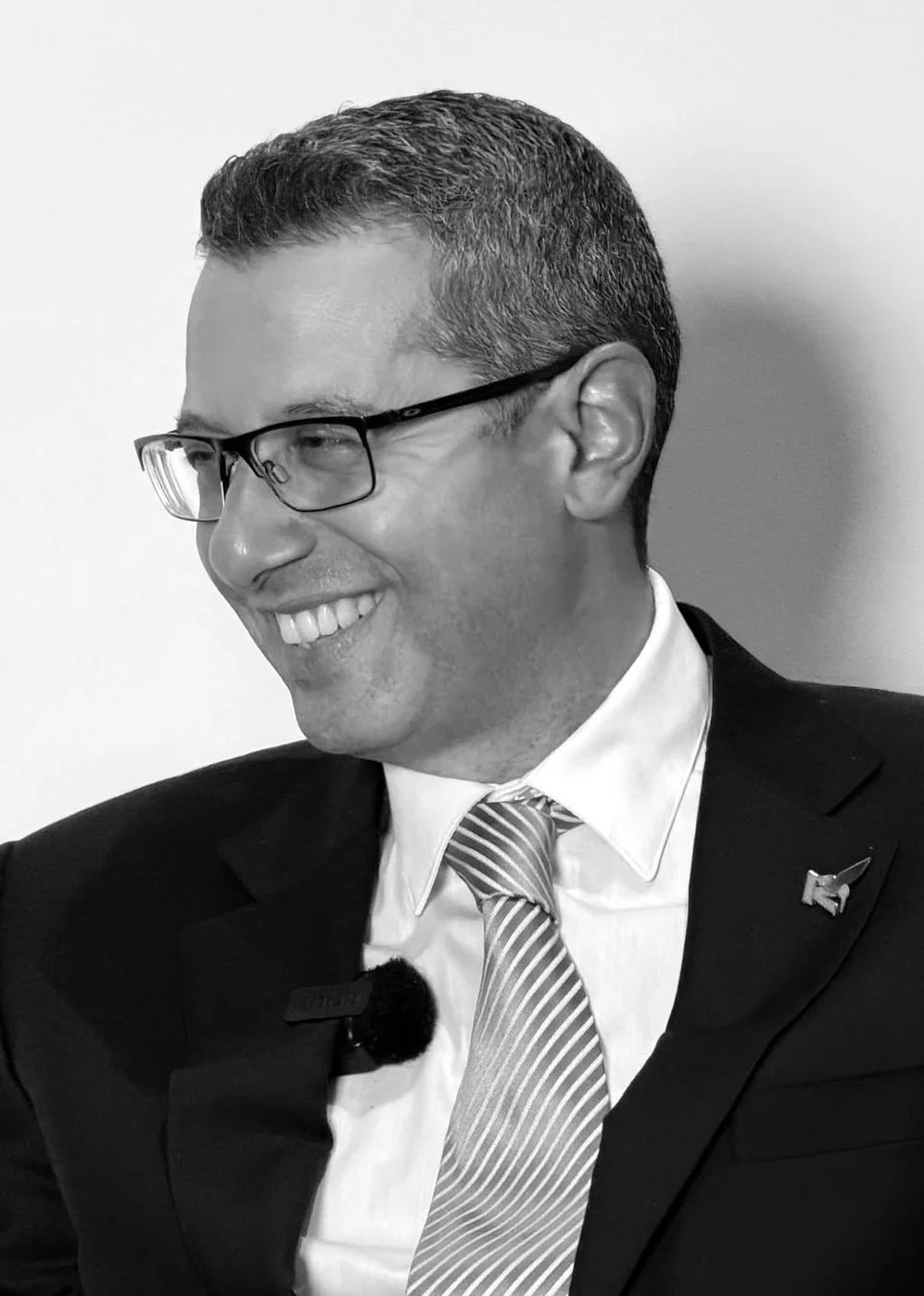
Vancouver Liberals - mayoral candidate Kareem Allam
Vote Vancouver - mayoral candidate Rebecca Bligh
Click each photo to enlarge.
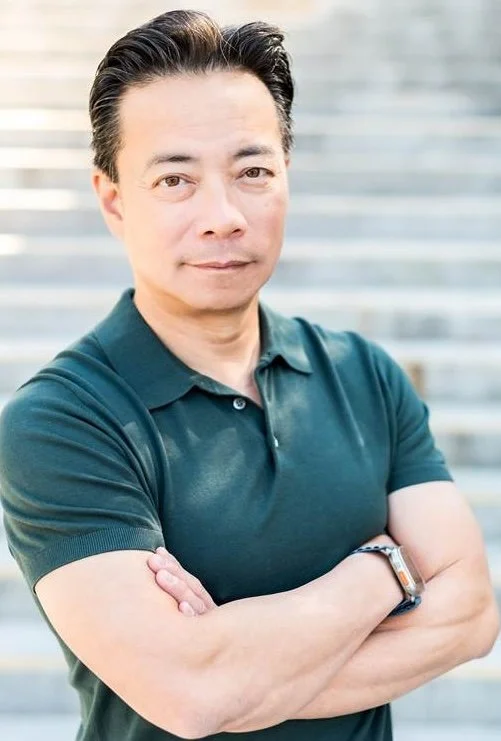

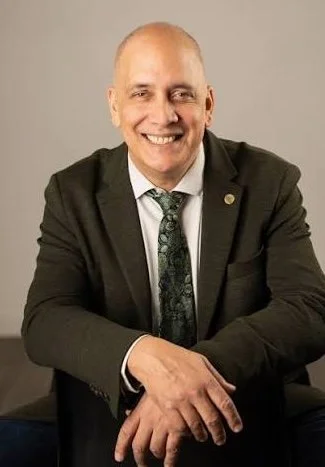
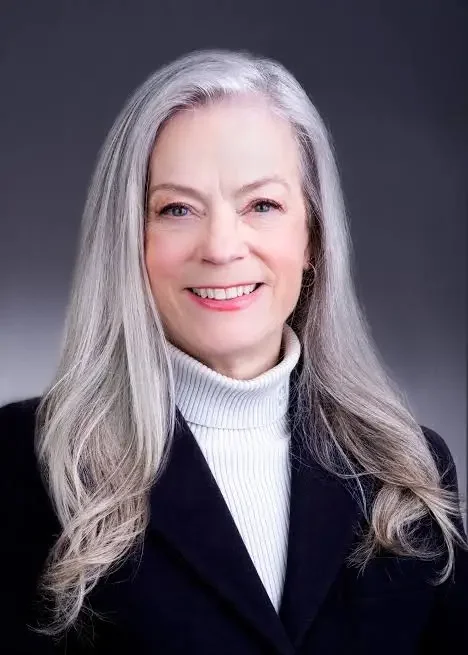
The Questions
Click the + below to expand and read each party’s response; when expanded, click the - to close that response.
-
ABC Vancouver recognizes that Vancouver needs more hotel accommodation, and we support responsible investment that strengthens our tourism economy, creates jobs, and contributes to the city’s long-term growth. At the same time, the need for additional hotel capacity does not mean every proposal is appropriate for every location.
The proposal at 2030 Barclay has evolved significantly, and Council has referred it back to staff for further consideration. As with any major development, we believe it is important to consider both the broader benefits of the project and how it fits within the surrounding community.
West of Denman is a predominantly residential part of the West End, immediately adjacent to Stanley Park. Considerations such as scale, neighbourhood fit, traffic, pedestrian and cycling safety, shadows, views, and overall livability are important and deserve careful consideration.
ABC Vancouver will continue to support housing and tourism investment where it makes sense, while ensuring growth delivers meaningful public benefit and responds to the neighbourhood in which it is located. Our goal is to see a proposal that helps add needed housing and hotel capacity while respecting the character and livability of the West End. -
When the proposed 24-storey hotel at 2030 Barclay came to council, COPE Councillor Sean Orr rigorously questioned staff on why a new hotel was needed at all — the city has already demolished hotels in the West End, approved close to 6,000 units toward its hotel targets, and many existing hotels sat mostly empty during FIFA. COPE Councillor Orr pressed staff on why the city's Hotel Policy, which he voted against, was allowed to override both the West End Plan and the RM-58 zoning conditions specific to this site. Staff maintained the building was already a hotel, but that framing ignored that residents had, at one point, actually been evicted from apartments there. Having lived at Barclay and Gilford for years, Orr knows this neighbourhood intimately — it's effectively an extension of Stanley Park, not a hotel district. He was prepared to vote against the application outright, but when the majority voted to refer it back to staff instead, he supported that outcome as the best available path forward.
-
While the current four storey boutique Rosellen Hotel has integrated well with the area, the proposed 24-storey with rooftop bar suggests a significant scale of impact, traffic, and noise in this quiet zone next to Stanley Park. I am further skeptical this location could succeed given the failure of the nearby Coast Plaza Hotel at an arguably better location. We do not support a 24-storey hotel at this location, though we must qualify that statement that we would approach any future re-zoning proposal with an open mind, in accordance with the law surrounding quasi-judicial public hearings.
-
TEAM for a Livable Vancouver supports the thousands of West End residents who oppose a 25-storey hotel rezoning project for 2030 Barclay that contravenes the West End Community Plan.
Residents’ opposition has been growing for months. When the Stop2030Barclay group staged a rally outside City Hall on Feb. 19, TEAM was the only municipal party on hand to show its support.
TEAM salutes the hard work and grassroots initiative of the Barclay group as a good example of how to fight back against City Council’s routine dismissal of residents’ concerns.
Residents say the project, with 248 hotel units, an indoor/outdoor rooftop amenity space and ground-floor restaurant and lounge, is far too big for the space. They say it will damage neighbourhood character, shadow nearby amenities, and cause havoc with traffic and parking.
-
Because Vancouver Independent Parks Party is nominating only Park Board candidates, our ability to control what happens beyond Park Board jurisdictions may be limited to voicing our concerns for consideration by Council. However, Park Board can request to be informed of a future development application. We should request that such notification include potential impacts on Stanley Park, and we should evaluate those impacts and present Council with our recommendations.
Unfortunately, the current Park Board on March 29, 2026 resolved only to take a limited step (requesting to be informed) but failed to request an impact statement and failed to commit to evaluating the impact.
Independent Parks Party considers this Park Board response to be inadequate. When our commissioners are elected this fall, we intend to advance the stronger positions, i.e., full impact analysis and report back to Council and to the public with results and recommendations.
We will always defend the public’s right to be informed about, and participate in, governmental decisions which affect their wellbeing.
-
Vancouver needs more hotel rooms. The place to add them is the downtown core and along major corridors, under a clear citywide hotel policy. A spot rezoning on a residential block beside Lost Lagoon is the wrong way to do it. The West End Plan was written with residents over years of consultation. A single application should not override it.
The laneway behind the site already struggles with garbage trucks. Adding hotel service traffic to it makes no sense. Neighbours have also raised a fair worry about precedent at the edge of Stanley Park.
A Vancouver Liberal council would not support this rezoning as proposed. We would finalize a hotel policy that tells developers where new hotels belong. That way, decisions like this stop being one-off fights between a developer and a neighbourhood.
-
Vote Vancouver will bring the deferred 2030 Barclay decision back for a proper review, with real community consultation and a clear look at the environmental impact. Vancouver needs housing, and we'll weigh that seriously, but residents shouldn't feel a decision was made about their neighbourhood without them. When consultation is skipped, trust between residents and City Council suffers, and I won't let that happen.
Click the + below to expand and read each party’s response; when expanded, click the - to close that response.
-
ABC understands why West End residents and swimmers are concerned about replacing the existing 50-metre Vancouver Aquatic Centre pool with a 25-metre pool. The facility is aging and requires major renewal, and the approved project will provide residents with a modern aquatic facility that includes swimming, diving, leisure and wellness amenities, fitness space, and improved accessibility.
At the same time, Vancouver is a growing city, and we believe our long-term approach must add net-new aquatic capacity rather than simply replace existing infrastructure one-for-one.
That is why the City’s 2027–2030 capital planning work includes exploring a new year-round 50-metre competition pool, including potential locations and funding arrangements. Our goal is a stronger city-wide aquatic network that supports competitive swimming and diving, lessons, recreation, and community use.
We need to do both: renew the Vancouver Aquatic Centre so residents have access to a safe, modern facility today, while making the long-term investments necessary to expand Vancouver’s aquatic capacity for the future. -
Councillor Sean Orr voted against awarding the demolition contract in July, while the legal challenge to this decision was still before the courts. He asked tough questions and pointed to documents obtained through FOI and court discovery showing staff scoped a smaller pool, months before telling the public the 50-metre pool was off the table — even though voters approved $103 million in 2022 specifically for a 50-metre replacement. COPE's Park Board candidates have also been very vocal: our pools shouldn't be downsized quietly, after voters already paid for something bigger.
-
The new pool is not smaller per se, in fact more leisure and recreational aquatic facilities are being proposed. The lap pool is significantly shorter though. While the shorter length pool is a hindrance to 50m swimmers, the new pool purports to offer a lot more amenities and accessibility for all users. As has been established, the land title issues precludes the larger footprint necessary to enable modern accessibility. As has also been established the courts have upheld the Park Board’s legal authority, and rejected a public appeal to stop the project. All that said, the concerns from the 50m swim community suggest there is a desperate need for new aquatic facilities and it certainly informs Park Board capital planning priorities that the Greens intend to honour.
-
TEAM for a Livable Vancouver has made it a core platform policy to retain or restore a world-class 50-metre pool in the Vancouver Aquatic Centre renewal project
Platform Commitment: TEAM is advocating to reverse the city's current plan to downsize the historic 50-metre pool to a 25-metre pool during the upcoming $175 million facility renewal.
Key Candidates: The municipal party welcomed Protecting Our Vancouver Aquatic Centre Society (POVAC) directors Jon Girard and Mayeli Alvarez as Park Board candidates to champion transparency and preserve the full-length competitive pool.
Proposed Action: Maintain a 50-metre training standard that accommodates local swim clubs like the Canadian Dolphins.
-
The citizens of Vancouver voted for renovation of the Vancouver Aquatic Centre with an Olympic-size pool. With the closing of VAC there is no regulation Olympic pool in the city. We believe that Vancouver ought to be a world-class city, and therefore the lack of an Olympic-size pool is substandard.
There is strong evidence that one, the current VAC could have been repaired rather than demolished; and two, City bureaucrats failed to inform the Park Board commissioners of a feasible architectural model for a rebuild with a 50-meter pool. Even when finally informed, the commissioners refused to modify their misinformed decision.
The seven elected Park Board commissioners have exclusive jurisdiction over all parks, including the parkland on which the Vancouver Aquatic Centre is situated. We are committed to reversing the mistakes of the City and current Park Board by directing staff to halt the planned rebuild of the Vancouver Aquatic Centre until a 50-metre pool is restored to the plan.
-
In 2022, voters approved $103 million in borrowing believing they were replacing a 50-metre pool. The city then delivered a design with half that length. The court has ruled the decision legal. It was still a breach of trust, and residents are right to be angry.
Demolition starts next month. We will not pretend a new council can reverse that. Here is what we will do. Before the main tank is built, we will order an independent review of whether a 50-metre tank can fit the design. If it cannot, we will put a new 50-metre pool in the capital plan with a site, a budget, and a date, as part of our $1.35 billion parks commitment. We will also require that every future borrowing question on the ballot state exactly what voters are paying for.
-
Ultimately, I support the VAC remaining a 50-metre pool. But the Park Board has made its decision and completed the steps needed to comply with the plebiscite timing, and reopening it now would put voter-approved funding at risk and leave the West End without a pool even longer. I'm disappointed in how the plebiscite was framed. Voters deserved a clearer picture of what they were being asked to decide, and whatever anyone thinks of the result, that isn't how a big public decision should be put to residents. Vote Vancouver will respect the Park Board's process, deliver the new VAC with public reporting on schedule and cost, and back the independent audit. We'll also consult user groups before any 50-metre design is locked, so residents are never again asked to decide without the full picture.
Click the + below to expand and read each party’s response; when expanded, click the - to close that response.
-
ABC Vancouver strongly believes in protecting and enhancing our public green spaces, and we understand how important Nelson Park is to residents of the West End.
At the same time, Vancouver’s electricity infrastructure needs to keep pace with population growth, new housing, and increasing demand for electricity. The proposed BC Hydro substation is intended to help meet growing demand in downtown and the West End, with an underground design that reduces its permanent footprint on the community.
Essential infrastructure and protecting valued public spaces should not be competing objectives. ABC would expect any project at Nelson Park to minimize its construction footprint, retain as many mature and high-value trees as reasonably possible, protect or replace affected community amenities, and restore the park to an equal-or-better standard once construction is complete.
Residents also deserve transparency about what will be affected, how amenities will be replaced or restored, and what the park will look like when the work is finished. Our goal should be to deliver the infrastructure a growing city needs while protecting the parks and public spaces that make neighbourhoods like the West End such great places to live. -
COPE has opposed this project from the start - since 2018 when COPE park commissioners raised the alarm the moment BC Hydro proposed burying a substation under Nelson Park. This is not a small project - it will destroy Lord Roberts Annex and over 80 mature trees will be cut in a park that serves over 20,000 west end residents. Sure the West End needs a new substation to replace the current aging facility, but why is an irreplaceable public park and a neighbourhood school being treated as the perfect location? We need to evaluate alternate sites before proceeding - including other underused or transitioning properties (e.g., St. Paul's Hospital property before any final redevelopment commitments lock it in) in the area that could accommodate this infrastructure without demolishing a school and gutting a dense neighbourhood’s tree canopy.
-
We do not support the current design configuration for Nelson Park and understand the BCUC is reviewing it. We think the loss of trees in particular is excessive, especially as much of it is to accommodate crane swing for the temporary construction, and believe a more thoughtful solution could have ripped up Nelson Street as the electrical right of way and had far less impact on mature trees. We do understand that the School Board did agree to redevelop Lord Roberts Annex in exchange for funds to replace the school and build a new school at Coal Harbour. Because the Coal Harbour school is already built and paid for, stopping the project now would significantly affect both taxpayers and children. Despite this, the impacts on Nelson Park should still be mitigated. Long term, Nelson Park must be converted from City-owned “custody care and management” by the Park Board, to Permanent Park status under the exclusive care of an intact elected Park Board.
-
TEAM for a Livable Vancouver has officially pledged to rescind the Vancouver Park Board's authorization for the land use agreements that allow BC Hydro to build an underground electrical substation at Nelson Park.
As part of their "Better Parks and Recreation for Everyone" policy platform, the municipal political party opposes the $1 billion West End Substation project. The party states that if its candidates are elected, they will formally request that the British Columbia Utilities Commission (BCUC) deny the required public convenience permit to halt the development.
Core Policy Details
Halt Construction: Rescind the real estate rights-of-way and land use permissions previously granted to BC Hydro.
Protect Park Space: Prevent the scheduled five years of heavy construction, excavation, and heavy machinery placement (such as a 33-meter deep concrete crane anchor) inside Nelson Park.
Save Urban Canopy: Prevent the slated removal of up to 83 mature trees and the disruption of local community gardens.
Draw a "Bright Line": Establish a strict policy rule against sacrificing existing public parkland for industrial or corporate infrastructure developments.
-
The policy of Vancouver Independent Parks Party is that there should be no loss of existing parklands for any reason. We have been informed that alternative sites exist for a hydro substation should it be needed, albeit costing more to BC Hydro for land rights acquisition than a public park.
However, we maintain that our parks, forests, green spaces, community gardens, and schools cannot be assigned dollar values and should not be regarded as marketable real estate. We believe that BC Hydro’s manipulation of the government and its marketing attempts to the public are inappropriate behaviours for a public utility. Strongarming acquisition of a public resource because shortsighted officials are willing to sell at lower cost than would private landowners amounts to a classic case of externalization —where the true cost of a commodity is subsidized by the public rather than being built-in to the cost of the product.
We understand that the Nelson Park sale entailed the participation of other entities, e.g., the School Board and City Council. We also understand the right-of-way sale may have already been completed. At the same time, the entire project is contingent on permit approval by BC Utilities Commission.
When in office, Independent Parks Party commissioners will do our best to stop the project by moving to rescind authorization for the substation at Nelson Park and formally requesting that the British Columbia Utilities Commission deny the permit on the grounds that it is not supported by the current democratically elected Park Board and therefore is not the will of the citizens of this city.
In short, we will draw a line in the sand: no attrition of Vancouver parks.
-
The West End needs reliable power as it grows. Nelson Park is also the largest non-waterfront park downtown, and the community should not lose its trees and lawns for a decade.
The Province gives BC Hydro broad authority here, so the city has to use every lever it has. The BC Utilities Commission is expected to decide this fall. A Vancouver Liberal council would press BC Hydro, through that process and through the Park Board's approval of the cable route, on several points:
routing cables under streets wherever possible, as TELUS is already doing
protecting mature trees
paying for full restoration of the park beyond the $8 million already offered
committing to binding construction timelines with a community liaison residents can reach
This is also why we oppose AI data centres within city limits. Our electrical capacity should serve homes, schools, and hospitals.
-
I don't like the substation, and Nelson Park is the wrong price for the West End to pay. Nelson Park is the backyard for 20,000 people, and losing up to 83 trees and much of the park for years is a real loss. But the BC Utilities Commission now decides the project, and it's going ahead. So my job is to make sure the West End gets back what it was promised. BC Hydro paid the Park Board $8 million in 2022 for West End parks, and there's been no public report on where it went. We'll get that report published. A Nelson Park master plan consultation was promised and never started, so we'll start it now. Every removed tree will be replaced in the West End, with survival rates published, and gardeners will be relocated before their plots are lost. And we'll publish a public update every quarter on Hydro's construction commitments reported publicly.
Click the + below to expand and read each party’s response; when expanded, click the - to close that response.
-
Public safety is our top priority, and that includes ensuring our sidewalks remain safe and accessible for all users, particularly pedestrians. ABC is committed to making our streets safer for everyone by investing in better infrastructure, including protected bike lanes and improved crosswalks. We support a balanced approach that promotes safe, active transportation while enforcing rules that keep pedestrians, especially seniors and those with mobility challenges, safe on our sidewalks. We believe that by creating clear, dedicated infrastructure, we can reduce conflicts and ensure everyone can move around our city safely.
-
This is a real safety concern, but it is also fundamentally a provincial issue - which was brought up at UBCM last week. Right now municipalities can't set their own rules for e-scooters - that authority sits with BC's Motor Vehicle Act in a 'pilot' program since 2021, now extended to 2028. COPE will push the province to deliver permanent, consistent rules. Meanwhile, we will act on what the city can actually do: expanding genuinely separated, protected bike infrastructure so cyclists and scooter users aren't pushed onto sidewalks in the first place. Pedestrians, cyclists, and mobility device users all deserve safe, clearly defined space in this city. Right now, an outdated provincial pilot program is leaving everyone, including seniors and disabled residents who rely on these devices to get around independently, without the space they need.
-
Cyclists and scooters do not belong on the sidewalks, full stop. It is a ticketable offence and a danger to pedestrians. Greens would direct more proactive enforcement by VPD and by-law officers.
-
Cycling and riding e-scooters on public sidewalks is illegal in Vancouver, posing safety hazards for pedestrians and people with disabilities.
TEAM’s core philosophy focuses on making neighbourhoods safe, peaceful, and livable. The party heavily emphasizes the safety of walkable communities. In public discussions surrounding micromobility, TEAM has highlighted growing concerns regarding injuries and the rapid, unregulated growth of shared e-scooter programs. TEAM strongly aligns with enforcing the restrictions that keep fast-moving micromobility devices off public footpaths.
-
We will direct better enforcement, in a non-authoritarian manner, of the existing Park Board bylaws which prohibit vehicles on pedestrian walks and cap speeds on the cycling lanes.
-
Sidewalks are for people on foot. The West End has one of the city's highest concentrations of seniors, and a fast e-bike on a narrow sidewalk is a real danger to them.
Riding on the sidewalk is already prohibited, but enforcement is close to nonexistent. We would direct bylaw officers to enforce it in the areas with the most complaints, starting with Denman, Davie, and Robson. We would also hold delivery app companies accountable when their riders break the rules.
Many riders use sidewalks because the protected bike network has gaps. We will close those gaps, separate bikes and pedestrians on the busiest stretches of the seawall, and treat pedestrian safety as a core part of Vision Zero.
Thank you for giving West End residents a chance to compare the parties on these issues.
-
Sidewalks should be safe for people on foot, especially seniors, kids, and people with disabilities. Cycling, scooting, and driving each need their own space, so we'll build safe infrastructure for cycling and scooting, starting in high-traffic areas. That applies to everyone, whether the bike or scooter is shared or privately owned. Where people still ride on sidewalks, we'll use enforcement like ticketing and public education. For shared e-scooters and bikes, we'll also work with operators and audit where misuse is worst so we can move rental locations away from those spots.
LINKS TO MORE INFORMATION
Learn more about the parties, their candidates, and their platforms at their websites and the news sites listed here:
THE PARTIES WE’VE HEARD FROM
MEDIA WE FOLLOW
Vancity Lookout (there’s a paywall, but worth it)
Read about the BC Provincial election candidates here.