
VIEWPOINTS
/DELIBERATE GENTLENESS
An Ethic of Caring in Ward 10D
by Wendy Sarkissian PhD
Ward 10D in Vancouver’s St Paul’s Hospital is tucked away at the quiet end of a long corridor, a short roll past the noisy elevators and the clatter of meal carts, as if someone has decided to put a small sanctuary at the edge of all the chaos. I arrive on Christmas Eve, braced for doom and disinfectant, but what I meet instead is low light, an oddly homely space for a big city hospital, a dozen or so beds in a mix of two and four-bed shared rooms, soft voices at the nursing station, and a vase of carnations beside the hand sanitizer.
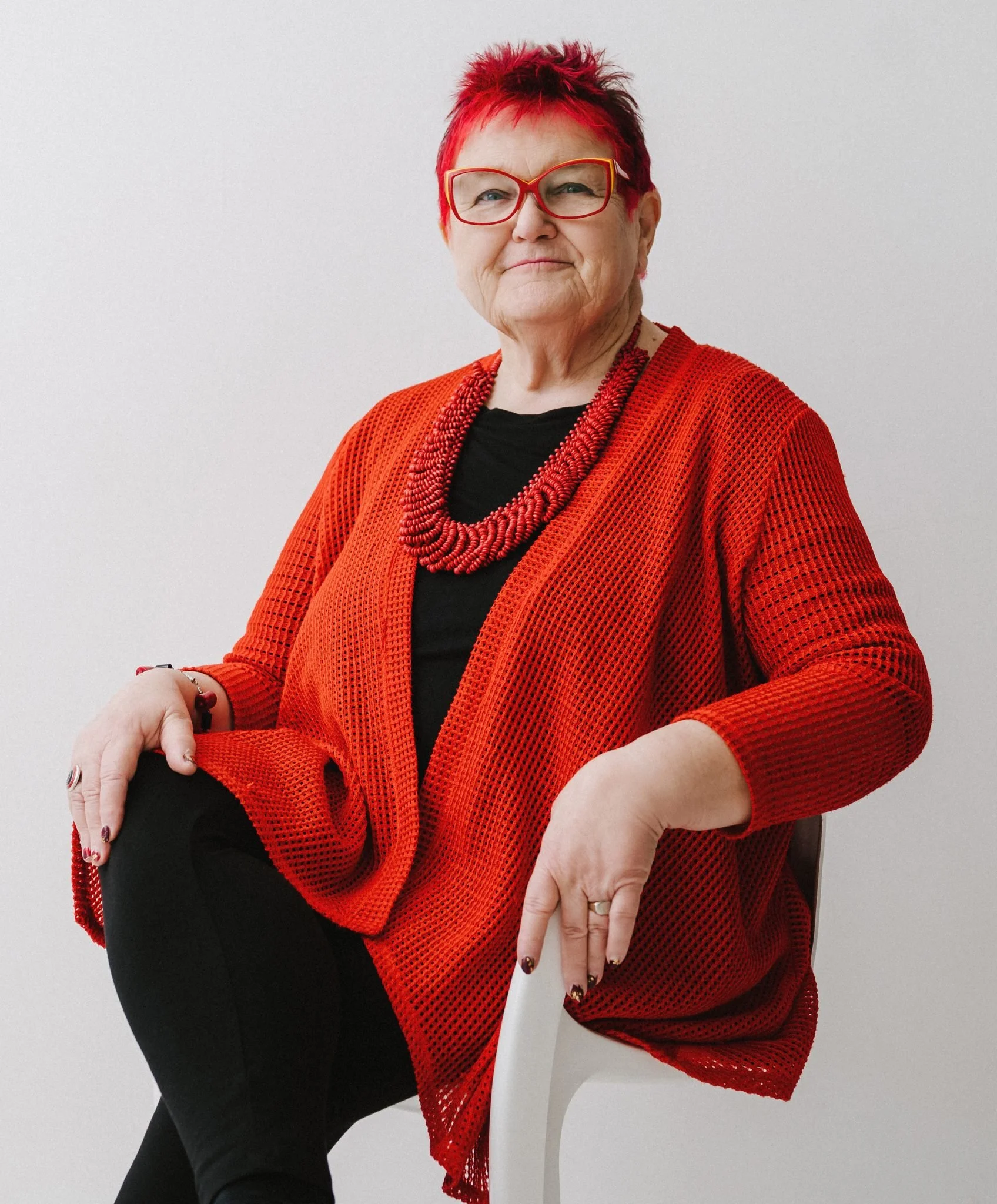
Wendy Sarkissian.
People here arrive with lungs that no longer cooperate, hearts that have given up their old stamina, cancers that have outsmarted the cleverest drugs. Yet what fills the space is not machinery or alarms but a deliberate gentleness, as if the whole ward breathes more slowly than the rest of the hospital.
My presence here feels like a clerical error. Yesterday, I was at home, wobbling out of bed toward the bathroom when my good leg refused to straighten, pain shooting from my foot to the top of my skull. The wastebasket became an emergency commode; the ambulance crew, two cheerful young men with impeccable manners, became my temporary lifeline down the stairs.
In the humming belly of St Paul’s Hospital, I joined the queue of broken bodies, shuffled into the cast room, X‑rayed, interrogated, medicated, and told my knee is “riddled with arthritis” and “locked” by some loose fragment only surgery can truly explain. By early afternoon, a bed manager appears at my side and tells me they have found me a bed “in the geriatric unit”.
When the porter wheels me through the double doors onto Ward 10D, a nurse wearing a Santa hat greets me. “There you are, love; we’ve been waiting for you, Wendy” she says, checking the brakes on my bed and tucking the sheet gently around my aching knee. She introduces herself, then the health care aide who will help me wash, Mike, the chaplain (whether or not you have any particular faith), and the volunteer who tops up water jugs and seems to know everyone’s grandchildren’s names.
This is not the triage frenzy I know from Emergency. No one is shouting or hunting for a missing chart or a missing person. People pause, look me in the eye, and listen to the end of my sentence.
On the wall near the nursing station there is a handmade sign: three small, neat marks under today’s date. Christmas Eve: three deaths. The names of the people who have died. The sign is oddly comforting. This really is where people come to die, and yet the acknowledgement is matter-of-fact, almost tender.
A nurse notices me staring. “We always keep a record like this. So that nobody leaves here without being noticed.” I nod, startled by the idea that a hospital ward can be organized around noticing.
the west end’s beloved st. paul’s hospital, where an ethic of caring rules in ward 10-D.
In the next bed lies Maisie, 86, her hair brushed and pinned, a string of rosary beads looped around her fingers. Her eyes are too bright, the way eyes get when the body is tired of fighting. I hear the doctor before I see him, his tone gentle as he pulls the curtain between our beds.
“Maisie, we’ve talked with the oncologists,” he says. “And we all share files here so I’ve read all their notes about your condition. The treatments are very hard on people your age. I’m worried they would do more harm than good now. What we can do is focus on your comfort. Manage your pain. Not do the aggressive treatment. Make sure you’re not alone.”
There is a pause.
“So when will I start the new treatment?” Maisie asks.
I stare at the ceiling, jaw clenched.
Later, when the corridor is quiet again, I roll carefully onto my side. “Maisie,” I whisper, “may I tell you what I think he meant?” I explain, as gently and plainly as I can, that the treatment would likely cause more suffering than benefit, that they want to keep her comfortable here instead, that she is unlikely to get better now.
She listens, then nods once. “I thought that might be it,” she says. “Thank you for saying it straight, Wendy. It’s funny, isn’t it? People are so scared of the word ‘die.’ But I’ve known for a while. I just didn’t like to be rude and mention it.”
Her words sit between us like something fragile and true.
For three days, I watch the staff move through the ward as if under a shared vow of gentleness. The nurses lean on bed rails and listen to stories about fishing trips, estranged children, and ancient dogs. The health care aides joke as they help people with a bedpan, keeping dignity alive with humour. Mike, the ever-serene chaplain stops by my bed, and the volunteer sits knitting while a woman talks about tomato plants and the feel of good soil.
On Christmas Day, the corridor smells of turkey and gravy. Trays arrive with cranberry sauce that wobbles, mashed potatoes piped in professional swirls, and a tiny rectangle of fruitcake.
A man who can barely swallow manages to eat half his serving of cranberry sauce and declares it “better than chemo.” Someone wheezes out a carol from a bedside radio. The whole ward feels like a fragile, improvised pageant of endings and small joys. All the while, the marks on the sign change, counting the quiet departures.
Nurses pause at empty doorways, grief present but never frantic, held by the rituals of the place: the names, the way someone always asks, “What was she like before she was sick?” and listens as if the answer is part of the care plan.
Lying here in my borrowed gown, I keep thinking about the philosophy of caring I once studied as a doctoral student. An ethic of caring, in my bones and in the books, begins not from rules or abstract rights but from relationships and responsibilities: who is here, what they need, how we answer them with attention and skill over time. Feminist thinkers say it grows out of the ordinary work of tending children, elders, patients, communities.
Here on Ward 10D, I see that work honoured and made visible, not as “women’s work” to be taken for granted but as the central moral labour of the ward. Environmental philosophers extend this caring outward to forests, rivers, animals, landscapes, the greater-than-human neighbours we depend on.
And in quiet moments, I sense that same attitude in the way these hospital staff speak about “this place,” as if the ward itself is a fragile ecosystem to be tended, not simply a machine for processing the dying.
In the middle of one night, my knee unlocks with an odd internal clunk and a rush of relief. The pain recedes to a manageable ache. Later, the occupational therapist appears, peers at my leg, and gives me a carefully optimistic look. “You’ve dodged a bullet, Wendy” she smiles. “For now. See your surgeon. Be careful on the stairs.”
On my last morning, I look again at the handmade sign. Three more names have appeared in my time here; three more invisible departures through a one-way door. I feel a tug of guilt at leaving alive while others stay. And stronger than the guilt is a fierce gratitude—for the accident of a locked knee that brought me here, for this small ward that has quietly scrubbed hospital life back to the basics of loving care, for the proof that an ethic of caring can be more than theory. It can be the way a place breathes.
Later, in my living room, my aching leg propped on a chair and a mug of cooling tea at my elbow, I begin to write. I write about listening as the policy of everyday life, turkey as sacrament, a calendar updated so no one slips away unmarked. I write about Ward 10D, where people still die but not unattended, where caring feels less like a service and more like a birthright.
And I know that for the rest of my life, when someone whispers “palliative care” with that fearful little shiver, I will think of this place instead. I will remember the soft voices, the Santa hat, the turkey and cranberry sauce, and the odd, unmistakable feeling that in the midst of dying, something very alive is quietly holding all of us up.
__________________________________________________________
About The Author: Canadian-born Dr. Wendy Sarkissian has lived in the West End since 2017. Formerly a community planner and planning academic in Australia, she is now a full-time author, ethicist, and activist. Her books include: Creative Community Planning; Kitchen Table Sustainability; and Housing as if People Mattered. She recently published a climate memoir, Creeksong: One Woman Sings the Climate Blues.
You can find out more about her books at www.creeksongbook.com or get in touch with Wendy by email at wendy@sarkissian.com.au. Enter her name in the search bar in the top-right of this page to find her previous contributions to The West End Journal.