THEN & NOW
/THE ONLY WOMAN IN THE ROOM
KG Grad Margaret Ecker a Witness to WWII History
By Fred Hume
(click images to enlarge)
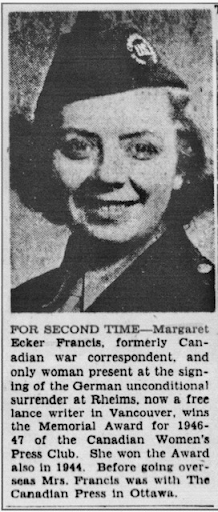
WAR CORRESPONDENT MARGARET ECKER (KING GEORGE ARCHIVES)
On May 23,1945, war correspondent Margaret Ecker was one of only three correspondents—one photographer and two reporters—to witness the surrender of the last remnants of the Nazi government. She was not only the sole Canadian present at this historic event but was the only woman in the room, the scene of the “Last Roundup”-- the closing of the book on Germany’s Third Reich, Germany now occupied by the Allied armies.
The then thirty-year-old Ecker, who grew up in Vancouver, had been selected as a member of the Canadian Press to report on both the VE-Day surrender days earlier, again the only woman reporter present, as well as this “final surrender” taking place in a room that included three prominent Nazis together with American, British and Soviet military representatives. As it happened, Margaret was the only Canadian newspaper woman who was a fully-accredited overseas war correspondent. For her readers she reported in unique detail—speaking to you as if she were writing you a personal letter—the tension in the room, vivid descriptions of the three Nazi officials, their expressions and physical idiosyncrasies.
Of the conclusion of the signing she wrote, “…with that, the three expressionless, defeated men shuffled from the room…” Margaret added, “We found it awfully hard to believe that those ordinary sheets of paper passing hand to hand were really the surrender and the end of the war which devastated the lives of our generation.”
Ecker had been a war correspondent for only nine months but had written dispatches from Britain during the previous two years. Initially she had enlisted as a press liaison officer with the Royal Canadian Air Force assigned the next year to Canadian Press’ wartime London Bureau as the Press’ first and only woman to be sent overseas. In this role she actively filed compelling stories such as the nursing sisters (“Canadian Florence Nightingale’s”) and interviews with wounded soldiers…providing a unique, perhaps more feminine touch to war reporting.
In part because of her heart-felt war coverage, Ecker was invited by Holland’s Queen Wilhelmina to tour liberated Netherlands as she had previously befriended the Queen while Wilhelmina was staying with her family in Ottawa. Margaret had also written several feature stories for the Canadian Press on Wilhelmina’s young daughter, Princess Juliana, during the Royal refuge in Canada. Our pioneering correspondent reported back to Canada the tragedies, resilience and gratitude surrounding the Dutch (Margaret’s family was of Dutch descent) while at the same time experiencing many of her own narrow escapes, including being bombed out of her quarters. Over time Margaret was trying to convey to Canadians “the horror of war and its beastliness”. In May 1947 the Dutch Queen named Ecker an Officer of the Order of the House of Orange, the first Canadian woman to be so honoured.
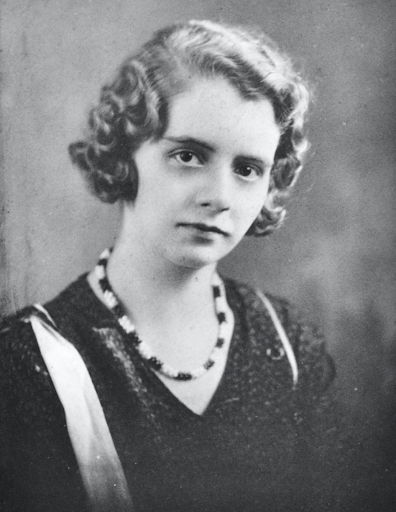
1933 KG GRAD MARGARET ECKER (KING GEORGE ARCHIVES)
Margaret Ecker was raised in Vancouver’s West End at 1249 Davie Street, attending Lord Roberts Elementary and King George High School and graduating in 1932. Her classmates at this small high school included future international broadcaster/journalist Norman De Poe and future UBC hall of fame athlete Art Willoughby. As a high school student as young as 14, she was somewhat of a prodigy, a prolific writer for The Vancouver Province with the gift of literally taking you to a different world with her stories, interviews and experiences.
Entering UBC she became a reporter and feature editor of The Ubyssey newspaper, a publication which for over a century has been a rich “training ground” for future “star” journalists—Margaret Ecker and the aforementioned Norman De Poe among them. Imagine—two future world-class journalists class mates in the same high school, then again working together at The Ubyssey on the Point Grey campus. Her graduating year 1935/36 also saw her editor of UBC’s year book, The Totem, a publication lauded that year by the Vancouver Sun.
Following graduation from UBC and prior to the war, Ecker began writing full time for the Vancouver Sun and Province. Her articles ranged from society to science and included heart-felt biographies and news on the challenges and victories of UBC alumni. She even wrote on what could be considered UBC’s initial archives and the gentleman who was the initial collector/curator. One of her 1939 Province pieces tells of the “Brilliant Work” of an up and coming young Canadian aeronautical engineer, Elsie MacGill, who would break new ground as a pioneering woman in this field especially with her modifications and production of the Hawker Hurricane, an essential aircraft used by Britain during WWII. Notable is that Ecker was informing her readers of a fellow Vancouverite, a fellow West Ender in fact. Margaret and Elsie were not only trail blazing female contributors to the war effort but both had attended the same high school, King George, (at different times) and both had been students at UBC. Margaret’s article proved to be prophetic in that in later years Elsie would be acknowledged nationally by appearing on a postage stamp, a commemorative coin (toonie), articles, books and even a comic book on her life.
Just prior to going overseas Ecker served as editor of UBC’s Graduate Chronicle (later renamed Trek Magazine) which served the interests of UBC alumni. Under her editorship in 1941, The Chronicle began publishing on a regular basis as she reported on the contributions of alumni toward the war effort.
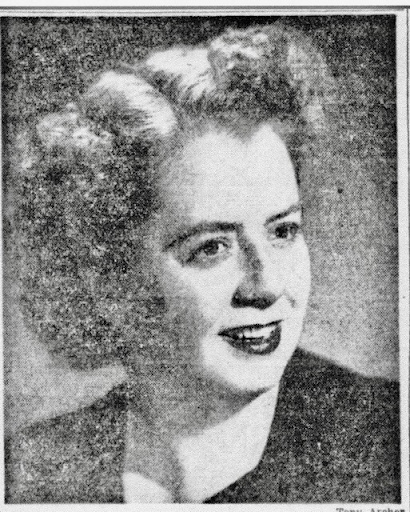
MARGARET ECKER (KING GEORGE ARCHIVES)
While overseas together with her husband Bob Francis, also a correspondent, Ecker won the 1944 Canadian Women’s Press Club Award for the year’s best biography, hers judged, “…the best piece of human-interest writing—terse, vivid, with a justifiable emotional dip…” She then won again in 1947 for an article in Chatelaine on the yearning ex-servicemen and women felt for far-off lands they visited during the war. Such creative topics were typical Ecker.
Following the war and returning to Vancouver as “globe-trotting freelance writers”, she and her husband continued writing for Vancouver newspapers and articles for magazines such as Saturday Night, and a 1955 piece in Liberty on Granville Street’s neon and “ghosts”. In 1956 she was named Women’s News Editor for the morning newspaper, Vancouver News Herald.
In 1965, while living with her husband and daughter on Atuza, a small island off Spain, Ecker died suddenly of heart failure at age 50. Her prolific, pioneering career in journalism on the world stage, highlighted by her key role in reporting on World War II including its final days, all began as a teenager at King George High School on Burrard Street.
CREDITS & THANKS
This article was gifted to the King George Archives by the author. Fred Hume is a BC athletics historian and entered the UBC Sports Hall of Fame in 2011.
SOURCES
2020 article in “The Tyee” by Tom Hawthorn, “What’s That Child Doing Here?”
Articles written by and about Margaret Ecker, 1928 through 1965, appearing in Canadian newspapers including The Vancouver Province and Sun
October 1941 issue of the UBC Graduate Chronicle
Canadian Encyclopedia entry (Margaret Ecker) by Tom Hawthorn
The original King George High School class and attendance records